
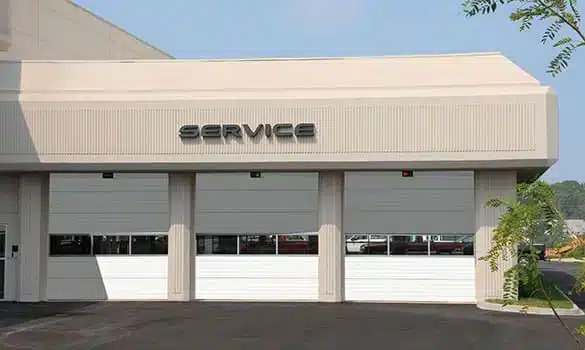
If you own or manage a commercial property in Yuba City, chances are the sectional door on your warehouse, loading dock, or storefront gets used dozens of times a day without a second thought. Most business owners never think about their commercial sectional door until it stops working. By then, it usually means an emergency repair call, unexpected downtime and a hit to the bottom line.
The short answer is most commercial sectional doors last between 15 and 30 years, depending on the material, how often the door gets used, the local climate and how well it has been maintained over the years. But that range is wide for a reason. A door on a busy Yuba City distribution center that cycles 30 times a day is going to wear out a lot faster than one on a seasonal storage unit that barely opens once a week.
This breaks down what determines a commercial sectional door’s real-world lifespan, the parts that fail first, the warning signs to look for and the maintenance steps that actually make a difference. Everything here comes from years of hands-on experience working with commercial garage doors across the Yuba City and greater Sutter County area.
The Real-World Lifespan of Commercial Sectional Doors
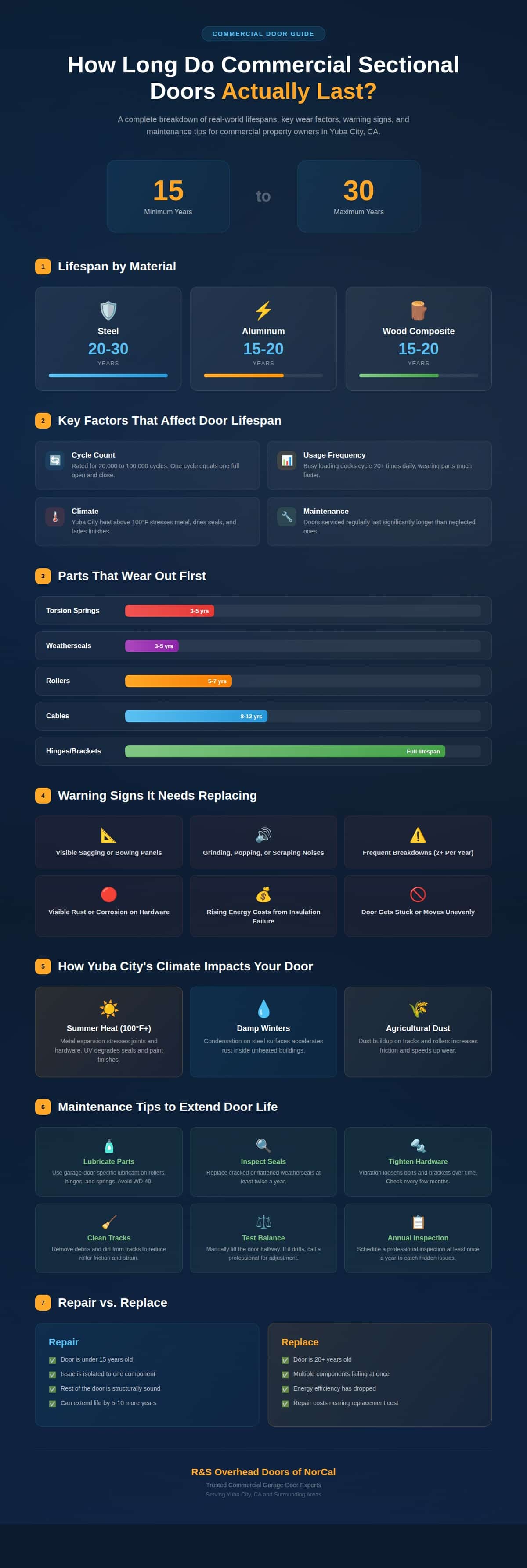
Manufacturer estimates are a starting point, but they rarely tell the whole story. The actual lifespan of a commercial sectional door depends heavily on the material.
- Steel sectional doors tend to be the most durable option for commercial use. With proper maintenance, a quality steel door can last anywhere from 20 to 30 years. Steel holds up well against daily wear and tear and most commercial-grade steel doors are designed to handle high-cycle use.
- Aluminum sectional doors are lighter and more resistant to rust, but they dent more easily and typically last between 15 and 20 years. These are common in situations where visibility matters, like auto dealerships or fire stations.
- Wood composite sectional doors are less common in commercial settings around Yuba City, but when used, they generally last 15 to 20 years. Wood composite requires more upkeep and does not handle moisture or extreme heat as well as steel.
One important thing to understand is that the “lifespan” of a commercial door is not just about the panels. Springs, rollers, cables, tracks and hardware all have their own wear timelines. The panels might look fine while the internal components are on borrowed time. A door is only as reliable as its weakest part.
To learn more about what separates a standard door from one built to go the distance, check out “Why High-Performance Commercial Sectional Doors Matter.”
What Affects How Long a Commercial Door Lasts
Several factors determine whether a commercial sectional door reaches the 15-year mark or pushes well past 25 years.
Cycle Count
Every commercial garage door has a cycle rating. One cycle equals one full open and one full close. Entry-level commercial doors might be rated for 20,000 cycles, while heavy-duty models can handle 100,000 cycles or more. A busy Yuba City warehouse that opens and closes its door 25 times per day will burn through 20,000 cycles in about two and a half years. Knowing the cycle rating before purchasing a door saves a lot of headaches down the road.
Frequency of Use
Not all commercial properties use their doors the same way. A loading dock at a distribution center near Highway 99 is going to cycle far more often than a storage facility on the outskirts of town. Higher frequency means faster wear on every moving component.
Climate and Environment
Yuba City sits in the Sacramento Valley, where summer temperatures regularly push past 100 degrees. That kind of heat causes metal to expand, which stresses joints, hinges and tracks over time. UV exposure breaks down weatherseals and fades paint finishes faster than in milder climates. In winter, temperatures are mild but damp enough to create condensation on steel surfaces inside unheated buildings, which leads to rust if left unchecked.
Installation Quality
A commercial sectional door that was not installed correctly from the start will never perform at its best. Misaligned tracks cause uneven wear. Improperly tensioned springs put excess strain on the opener and hardware. Quality installation by an experienced team is one of the best investments a business owner can make.
Maintenance Habits
This one is simple. Doors that receive regular maintenance last longer. Doors that get ignored until something breaks rarely make it to their full potential lifespan.
Proper maintenance also plays a big role in keeping energy costs down. For a deeper look at that topic, check out “How Do Commercial Sectional Doors Improve Energy Efficiency.”
The Parts That Wear Out First and When to Expect It
Even on a door that is in great overall shape, certain components have a shorter lifespan and will need attention well before the panels do.
Torsion Springs
Torsion springs are typically the first major component to fail on a commercial sectional door. Most standard torsion springs are rated for 10,000 to 20,000 cycles. On a high-use door, that could mean replacement every 3 to 5 years. High-cycle springs rated for 50,000 or even 100,000 cycles are available and worth considering for any door that sees heavy daily use.
Rollers
Nylon rollers are quieter and generally last around 10,000 cycles. Steel rollers are noisier but tend to hold up longer. In either case, worn rollers cause the door to move roughly, which puts extra stress on the tracks and opener.
Weatherseals and Bottom Seals
Seals are the unsung heroes of a commercial sectional door. They keep out dust, moisture, pests and outside air. In Yuba City, the combination of intense summer heat and UV exposure breaks down rubber and vinyl seals in about 3 to 5 years. Cracked or flattened seals reduce energy efficiency and let in debris from the surrounding agricultural environment.
Cables
Lift cables handle tremendous tension every time the door moves. Over time, friction causes cables to fray. A frayed cable can snap without warning, which is both a safety hazard and a guaranteed shutdown of the door.
Hinges and Brackets
These components usually last the full life of the door, but rust and misalignment can shorten that timeline. Hinges that are not lubricated properly will grind and eventually crack.
What to check: A simple visual inspection every six months goes a long way. Look for fraying cables, cracked seals, rust spots on hardware and any visible damage to panels. Listen for new sounds when the door operates. Grinding, popping, or scraping noises almost always point to a component that needs attention.
Important safety note: Torsion springs and lift cables are high-tension components. Attempting to replace or adjust them without proper training and tools creates a serious risk of injury. Always call a qualified commercial door technician for spring and cable work.
Keeping these components in good shape is not just about lifespan, it is also about protecting the people and property inside. Learn more in What Makes Commercial Sectional Doors Safe and Secure.”
Warning Signs That a Commercial Sectional Door Is Near End of Life
Knowing when a commercial door is approaching the end of its useful life can prevent costly emergency breakdowns and keep operations running smoothly.
Here are the most common signs to watch for:
- The door is visibly sagging, bowing, or has multiple dented or cracked panels
- Noise levels have increased noticeably, with grinding, popping, or metal-on-metal scraping during operation
- The door moves unevenly, jerks during travel, or gets stuck partway through a cycle
- Repair calls are happening more than twice a year, which usually means multiple components are failing at once
- Visible rust or corrosion has spread across panels, tracks, or hardware
- Energy costs have climbed without explanation, which can signal insulation failure in insulated sectional doors
- The door no longer seals properly at the bottom or sides, letting in outside air, dust and pests
Many Yuba City businesses have spent more on repeated patch repairs over two or three years than a full door replacement would have cost upfront. When repairs start stacking up, it is worth getting a professional assessment to compare the long-term cost of continued repairs against a new installation.
How Yuba City’s Climate Impacts Commercial Door Longevity
Location matters more than most people realize when it comes to commercial garage door durability. Yuba City presents a few specific challenges that business owners should be aware of.
Summer Heat
With temperatures regularly exceeding 100 degrees from June through September, metal components expand and contract daily. Over years, this thermal cycling fatigues joints, loosens hardware and warps tracks. Paint finishes and powder coatings break down faster under constant UV bombardment, leaving bare metal exposed to the elements.
Mild but Damp Winters
Yuba City winters are generally mild, but morning condensation is common, especially inside unheated warehouses and storage buildings. That moisture settles on steel surfaces and, if not addressed, accelerates rust formation on tracks, springs and panel edges.
Dust and Agricultural Debris
The Yuba City area is surrounded by agriculture. During harvest season and windy periods, fine dust and debris settle on tracks and rollers. This buildup increases friction, causes rollers to wear faster and can clog the track channels, forcing the door to work harder with every cycle.
Seasonal tip: Scheduling a professional maintenance visit in late spring before the heat sets in and again after harvest season when dust levels are highest can significantly extend the life of a commercial sectional door in this region.
Maintenance Tips That Actually Extend Door Life
Regular maintenance is the single most controllable factor in how long a commercial sectional door lasts. Here are the steps that make the biggest difference.
Lubricate Moving Parts Regularly
Rollers, hinges, torsion springs and tracks all benefit from regular lubrication. Use a silicone-based or lithium-based lubricant specifically made for garage doors. Avoid using WD-40 as a long-term lubricant. It works as a cleaner and short-term solution, but it dries out quickly and attracts dust, which creates more friction over time.
Inspect and Replace Weatherseals
Check the bottom seal and side seals at least twice a year. Replace any seal that is cracked, torn, or flattened. Fresh seals improve energy efficiency, block pests and keep out the dust that is common in the Yuba City area.
Tighten Hardware
The vibration from daily door operation gradually loosens bolts, brackets and roller mounts. A quick pass with a socket wrench every few months keeps everything secure and prevents bigger alignment issues.
Keep Tracks Clean
Wipe down the inside of the tracks and remove any debris, dirt, or buildup. Clean tracks allow the rollers to travel smoothly and reduce strain on the opener motor.
Test the Door Balance
Disconnect the automatic opener and manually lift the door to about halfway. If the door stays in place on its own, the springs are properly balanced. If it slides up or drops down, the springs need adjustment. Do not attempt to adjust torsion springs without professional help.
Schedule Annual Professional Inspections
A trained commercial door technician can spot problems that are not visible to the untrained eye. Issues like micro-cracks in torsion springs, early cable fraying, or slight track misalignment are much cheaper to fix when caught early. For properties in the Central Valley, a spring tune-up in April and a follow-up before the rainy season is a solid schedule to follow.
Repair vs. Replace: How to Make the Right Call
Deciding between repairing and replacing a commercial sectional door comes down to a few practical considerations.
When Repair Makes Sense
If the door is under 15 years old, the issue is isolated to one component like a single panel, a set of springs, or the commercial door operator and the rest of the door is structurally sound, repair is usually the smarter financial move. Replacing one or two panels or installing new springs on a door that is otherwise in good condition can buy another 5 to 10 years of reliable service.
When Replacement Makes Sense
If the door is 20 years old or more, multiple components are failing around the same time, energy efficiency has dropped, or repair bills over the past couple of years are approaching the average cost of a new commercial sectional door installation, replacement is the better long-term investment. A new door comes with updated hardware, better insulation options, improved cycle ratings and a fresh warranty.
A word of advice: Before making either decision, get an honest professional assessment. A trustworthy commercial garage door company will not push for a full replacement when a targeted repair will do the job. Ask for a breakdown of what needs fixing now, what is likely to need attention in the next 12 months and what the total projected repair cost looks like compared to the average cost of a new installation.
How to Choose a Commercial Sectional Door That Lasts
For business owners who are in the market for a new commercial sectional door, a few choices at the buying stage can make a major difference in how long that door holds up.
Choose the Right Cycle Rating
Match the cycle rating to the actual usage. A low-traffic storage unit might do fine with a 20,000-cycle door, but a busy loading dock should start at 50,000 cycles or higher. Paying a bit more upfront for a higher-rated door avoids early replacement costs.
Pick the Right Material
Steel remains the go-to choice for most commercial applications in the Yuba City area due to its durability and low maintenance requirements. Other options like a sheet metal door can also work well depending on the specific needs of the building. For buildings that need climate control, insulated steel sectional doors offer both longevity and energy savings, which matters when dealing with Central Valley summer heat.
Do Not Skimp on Hardware
The panels get all the attention, but the springs, rollers, tracks and cables determine how the door actually performs day to day. Commercial-grade hardware rated for high-cycle use outlasts standard components by a wide margin.
Work With an Experienced Local Installer
Installation quality has a direct impact on door lifespan. A company with experience in the Yuba City area understands the specific climate challenges and can recommend the right door configuration for the building. Local experience also means faster response times for future maintenance and repairs.
Ask About Warranty Coverage
A good warranty should cover both the panels and the hardware. Read the fine print and understand what is included, what voids the warranty and how long the coverage lasts.
Keep Your Commercial Sectional Door Running for Decades
A well-chosen, properly installed and regularly maintained commercial sectional door can easily last 20 to 30 years in the Yuba City area. The same principle applies to other commercial door types like grill roller doors, where longevity depends on the same core factors. The biggest factor that business owners can control is maintenance. Skipping annual inspections and ignoring small issues turns a 25-year door into a 12-year headache.
For any commercial property in Yuba City with a sectional door that is over 10 years old or showing any of the warning signs listed above, scheduling a professional inspection sooner rather than later is the smartest move. Catching problems early is always cheaper than dealing with a full breakdown during the busiest time of year.
Trusted Commercial Garage Door Experts in Yuba City
R&S Overhead Doors of NorCal has been helping businesses across Yuba City and the surrounding areas keep their commercial sectional doors in top condition for years. From professional inspections and routine maintenance to full door replacements, our team brings the hands-on experience and local knowledge that commercial property owners can count on. Whether a door needs a simple tune-up or a complete upgrade, we are ready to help. Contact us today or give us a call to schedule a free commercial door inspection and keep your business running without interruption.