
Picture this. A warehouse manager in Yuba City pulls up to the facility on a Monday morning and notices the commercial door panel is buckled. Or worse, the lock has been tampered with overnight. Situations like these are more common than most business owners realize and they almost always come down to one thing: the door was not built or maintained with the right safety and security features.
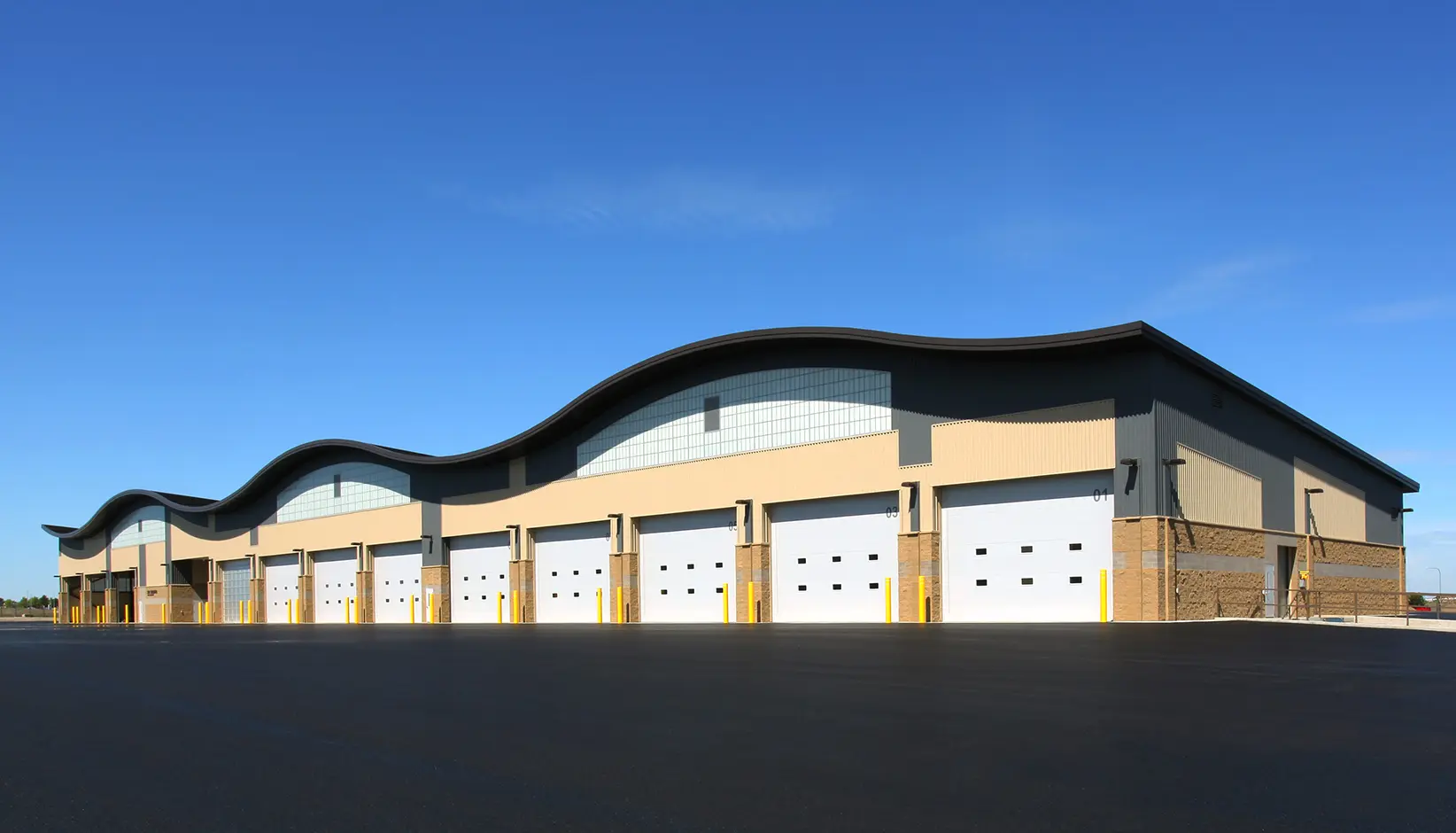
Commercial sectional doors are the large overhead doors made up of horizontal panels, or sections, that slide up along vertical tracks. They are found on warehouses, loading docks, auto shops, storage facilities and retail storefronts across Yuba City and throughout Sutter County. These doors take a beating every single day and when they lack proper safety mechanisms or security hardware, the risks to people and property go up fast.
This guide breaks down the key features that make commercial sectional doors both safe for daily operation and secure against unauthorized access. These insights are drawn from hands-on experience working with commercial door systems in Northern California, including the unique climate and business conditions found right here in Yuba City, CA.
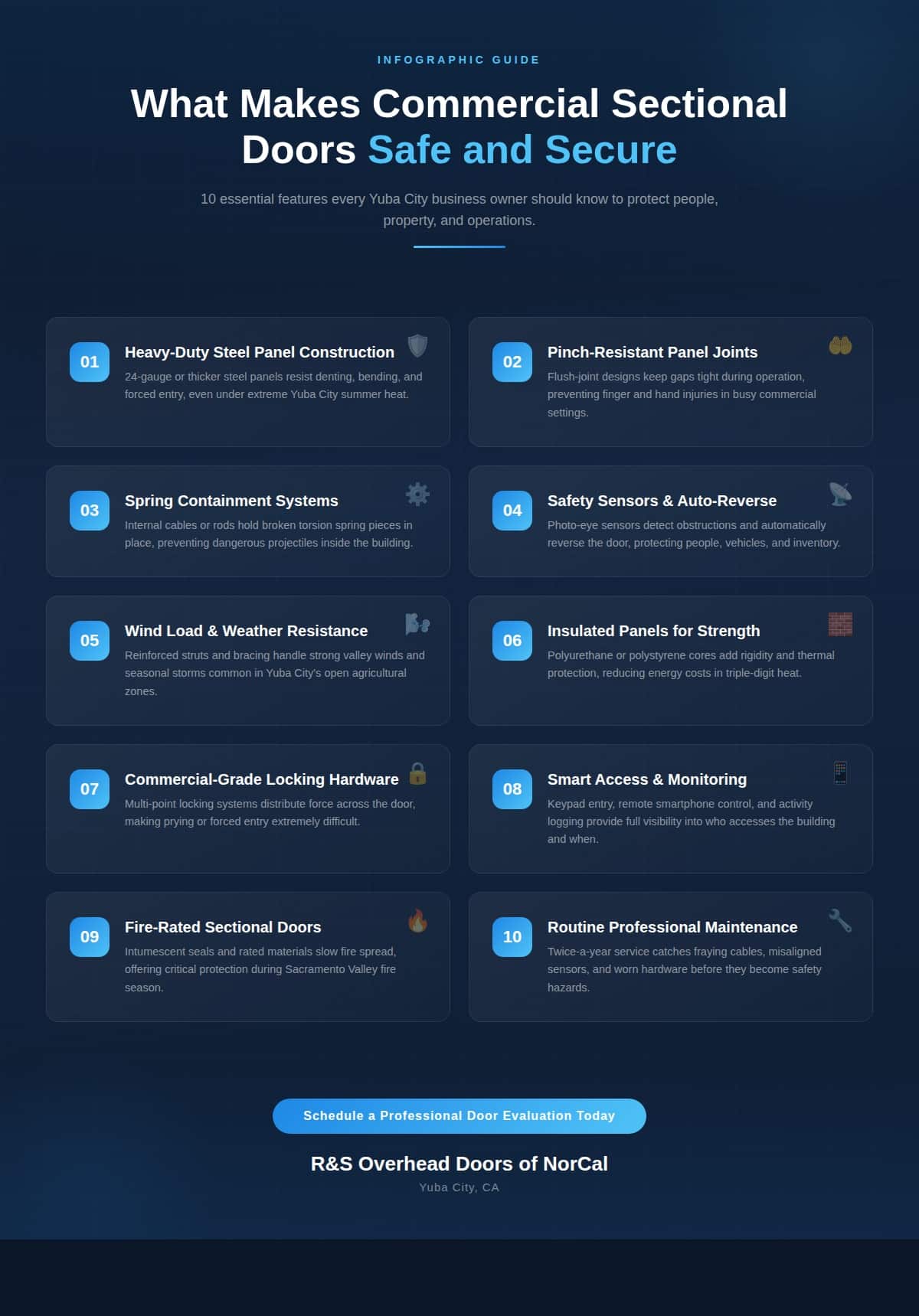
In short, a safe and secure commercial sectional door comes down to quality panel construction, reliable safety mechanisms like sensors and spring containment, strong locking hardware, modern smart access options and consistent professional maintenance.
Heavy-Duty Steel Panel Construction
The foundation of any safe and secure commercial sectional door starts with the panels themselves. Most commercial-grade doors are built with steel panels, but not all steel is created equal. The gauge of the steel, meaning its thickness, plays a major role in how well the door holds up against daily wear, impact and forced entry attempts.
For most commercial applications in Yuba City, 24-gauge or 25-gauge steel panels are the standard. Thicker panels resist denting and bending, which matters when forklifts, delivery trucks and heavy equipment are operating near the door every day. Thinner panels might save a few upfront, but they tend to warp and weaken faster, especially under the kind of extreme summer heat that Yuba City is known for. Triple-digit temperatures put thermal stress on cheaper materials, causing them to expand and contract in ways that compromise the door over time.
What to check: Ask the installer or manufacturer about the steel gauge of the panels. For high-traffic commercial bays, 24-gauge steel or thicker is the recommended starting point. If the existing door panels show visible warping, denting, or separation at the seams, it may be time for a professional evaluation.
For a deeper look at how panel quality and construction impact long-term performance, check out “Why High-Performance Commercial Sectional Doors Matter.”
Pinch-Resistant Panel Joints
One of the most overlooked safety features on a commercial sectional door is the design of the joints between each panel. As the door opens and closes, those panel joints flex and move. On older or lower-quality doors, the gaps between panels can pinch fingers and hands, sometimes causing serious injuries.
Modern commercial sectional doors use what the industry calls pinch-resistant or flush-joint panel designs. These joints are engineered so that the gap between panels stays tight and protected during operation, significantly reducing the risk of finger or hand injuries. This is especially important in commercial settings where employees may be working near the door or operating it manually.
OSHA workplace safety guidelines highlight door-related injuries as a preventable hazard and pinch-resistant joints are one of the simplest ways to address that risk.
What to check: During routine inspections, look closely at the joints between panels. If gaps are forming or the panels are no longer sitting flush against each other, that is a sign of wear that needs professional attention before someone gets hurt.
Tight panel joints also play a role in thermal performance. Learn more about that connection in “How Do Commercial Sectional Doors Improve Energy Efficiency.”
Spring Containment Systems
Commercial sectional doors rely on torsion springs to counterbalance the weight of the door, making it possible to open and close smoothly. These springs are under an enormous amount of tension. When a torsion spring breaks without any containment system in place, it can release violently, turning into a dangerous projectile inside the building.
A spring containment system uses a cable or rod that runs through the center of the spring. If the spring snaps, the containment device holds the broken pieces in place instead of allowing them to fly across the room. This is a critical safety feature for any commercial environment where people are working nearby.
Tip: Never attempt to adjust, repair, or replace torsion springs without professional training and tools. Spring work is considered one of the most dangerous aspects of commercial door service. A qualified technician should always handle spring-related repairs.
Spring condition is one of the biggest factors in a door’s overall lifespan. Find out more in “How Long Do Commercial Sectional Doors Actually Last.”
Safety Sensors and Auto-Reverse Mechanisms
Safety sensors are one of the most important active safety features on a commercial sectional door. Photo-eye sensors are mounted near the bottom of the door on each side of the opening. They project an invisible beam across the doorway and if anything breaks that beam while the door is closing, the system triggers an automatic reverse, stopping the door and sending it back up.
Commercial-grade photo-eye sensors are built to be more robust and reliable than residential versions. They are designed to handle dust, vibration and the general wear that comes with a busy commercial environment.
For Yuba City businesses with loading docks, forklift traffic, or employees moving in and out frequently, properly functioning safety sensors are not optional. A malfunctioning sensor could mean a several-hundred-pound door closing on a person, a vehicle, or valuable inventory.
Tip: Test the safety sensors at least once a month. Place an object, like a box, in the path of the closing door. If the door does not reverse automatically, stop using the door and call a technician right away. This simple test takes less than a minute and could prevent a serious accident.
Wind Load and Weather Resistance
Wind load ratings measure how much wind pressure a door can withstand before failing. While Yuba City is not a hurricane zone, the Sacramento Valley does experience strong seasonal winds, sudden storms and pressure changes that can put serious stress on a commercial door that is not rated for those conditions.
Doors with proper wind load ratings feature reinforced struts, additional bracing and heavier-duty hardware that distribute wind pressure across the entire door system instead of concentrating it on a few weak points. Without these reinforcements, a strong gust can bow panels inward, pop tracks, or even push the door off its hardware entirely.
Businesses located in more exposed areas around Yuba City, particularly near the open agricultural zones where there is little to break the wind, should pay extra attention to wind load specifications.
What to check: Ask the installer about the door’s wind load rating and whether reinforcement options are available. Upgrading to a wind-rated door is a modest investment compared to the cost of replacing a door that has been damaged or blown in during a storm.
Insulated Panels for Structural Integrity and Climate Control
Insulated commercial sectional door panels serve two purposes. First, they provide thermal protection, keeping heat out during summer and warmth in during cooler months. Second and often overlooked, insulated panels add structural rigidity to the door itself.
Panels filled with polyurethane or polystyrene foam are significantly stronger and more resistant to denting and bending than hollow, non-insulated panels. That added rigidity makes the door harder to force open and more durable under daily use.
In a climate like Yuba City’s, where summer temperatures regularly push past 100 degrees, insulated panels also help protect temperature-sensitive inventory and reduce energy costs. A well-insulated door keeps cool air inside the building, putting less strain on HVAC systems and lowering utility bills.
Tip: Check the door’s R-value, which measures thermal resistance. For most commercial properties in Yuba City, an R-value of 12 or higher makes a noticeable difference in both energy efficiency and panel strength. If the current door has no insulation, upgrading to insulated panels is one of the most cost-effective improvements available.
Commercial-Grade Locking Hardware
A commercial sectional door is only as secure as its locking system. Standard residential-grade locks are simply not built to withstand the kinds of forced entry attempts that commercial properties face. Businesses need hardware that is specifically engineered for commercial applications.
Common commercial locking options include interior slide locks, keyed cylinder locks and electric lock operators. For maximum security, multi-point locking systems are the gold standard. These systems engage the door at multiple points along the track, distributing force so that prying or leveraging the door open becomes extremely difficult.
Electric lock operators add another layer of convenience and security by automatically engaging the lock when the door closes, eliminating the chance of human error.
Tip: Even with an electric operator, always verify that manual locks are engaged after business hours. A power outage can disengage electric locks, leaving the door vulnerable. Getting into the habit of a quick manual check at closing time is one of the easiest and most effective security practices a business owner can adopt.
Smart Access and Monitoring Systems
Technology has changed the way commercial properties manage door access. Modern smart access systems allow business owners and facility managers to control and monitor their doors remotely using smartphones, tablets, or computers. Features like keypad entry, Bluetooth-enabled access and cloud-based activity logging make it easier than ever to know exactly who is opening and closing the door and when.
For Yuba City business owners who manage properties they do not visit every day, remote monitoring is a game changer. Getting a real-time alert when a door is opened outside of business hours provides peace of mind and the ability to act fast if something looks wrong.
Security camera integration takes this a step further by pairing visual verification with access logs, creating a complete picture of door activity at all times.
Tip: For businesses managing multiple access points, which is common in Yuba City’s industrial parks and storage facilities, a centralized smart access system simplifies operations and tightens security across the board. The upfront investment pays for itself quickly in reduced risk and improved efficiency.
Fire-Rated Sectional Doors
Depending on the building’s use, location and local code requirements, a fire-rated sectional door may be necessary. Fire-rated doors are constructed with special materials and seals, including intumescent strips that expand when exposed to heat, effectively sealing the door opening and slowing the spread of fire.
Even when fire-rated doors are not strictly required by code, they are worth considering for added protection. Yuba City and the broader Sacramento Valley region experience fire season every year and the risk of wildfire or fire-related incidents is a real concern for commercial properties.
Fire-rated commercial sectional doors go through rigorous testing and certification to meet specific time ratings, typically ranging from 20 minutes to several hours of fire resistance. Pairing a fire-rated door with a reliable commercial door operator ensures the system responds quickly and functions properly during an emergency.
What to check: Consult with the local Yuba City building department or a qualified commercial door installer to determine whether fire-rated doors are required for the specific property. Even if not mandated, the added layer of protection can be a smart investment, especially for properties storing flammable materials or located near wildfire-prone areas.
Routine Professional Maintenance
No matter how well a commercial sectional door is built, it will not stay safe or secure without regular professional maintenance. Components wear out. Hardware loosens. Sensors fall out of alignment. Weatherseals crack and deteriorate. All of these small issues add up over time and when left unaddressed, they create safety hazards and security vulnerabilities. This applies to every type of commercial door system, from sectional panels to a sheet metal door used on industrial buildings.
A thorough professional maintenance visit should cover spring tension, cable condition, sensor alignment, track inspection, weatherseal integrity, hardware tightness, lubrication of all moving parts and a full operational test of the door and its safety features.
A trained technician spots problems that most business owners would never notice on their own. Catching a fraying cable or a misaligned sensor before it fails completely is always cheaper and safer than dealing with an emergency breakdown.
Tip: Schedule professional maintenance at least twice a year. For businesses in Yuba City, timing those visits before the intense summer heat and again before the rainy season is the smartest approach.
Keeping Commercial Doors Safe and Secure in Yuba City
Safety and security in a commercial sectional door is never about just one feature. It is the result of multiple systems working together: quality steel panel construction, pinch-resistant joints, spring containment, reliable sensors, wind-rated reinforcement, proper insulation, strong locking hardware, smart access technology, fire-rated protection and ongoing professional maintenance.
Every one of these elements plays a role in protecting the people who work around the door every day and securing the property against threats like break-ins, weather damage and fire. Whether the property uses a sectional door, a grill roller door, or any other commercial overhead system, the same safety and security principles apply.
For Yuba City business owners who are unsure about the current condition of their commercial sectional doors, the best next step is a professional safety and security evaluation. A qualified commercial door technician can assess the entire system, identify weak points and recommend the most effective upgrades or repairs to bring the door up to the standard it needs to be.
Protecting a business starts at the door. Making sure that door is safe and secure is one of the smartest investments any commercial property owner in Yuba City, CA can make.
Trusted Commercial Door Experts in Yuba City, CA
R&S Overhead Doors of NorCal has been a trusted name in commercial and residential garage door services throughout Northern California. With deep experience in commercial sectional door installation, repair and maintenance, our team understands the unique demands that Yuba City’s climate and business environment place on these systems. From safety inspections to full door replacements, we deliver reliable, professional service that local business owners count on to keep their properties protected. Ready to make sure your commercial sectional doors are safe and secure? Contact us today or give us a call to schedule a professional evaluation and get expert recommendations tailored to your business.