
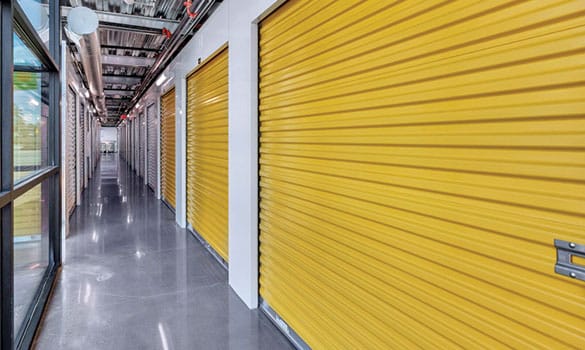
If there is one thing every Yuba City business owner understands, it is the challenge of managing indoor temperatures. Summers in the Sacramento Valley push well past 100 degrees on a regular basis and winter mornings can dip into the low 30s. That kind of climate puts enormous pressure on heating and cooling systems, especially in commercial buildings with large door openings like warehouses, service bays and loading docks.
So how do commercial sectional doors improve energy efficiency? In simple terms, they create a tighter, better-insulated barrier between the inside of a building and the outside environment. Through high R-value insulated panels, thermal breaks in the framing, advanced weatherstripping and smart operational design, these doors reduce the amount of energy lost through one of the largest openings in any commercial structure. The result is lower utility bills, more consistent indoor temperatures and less strain on HVAC equipment.
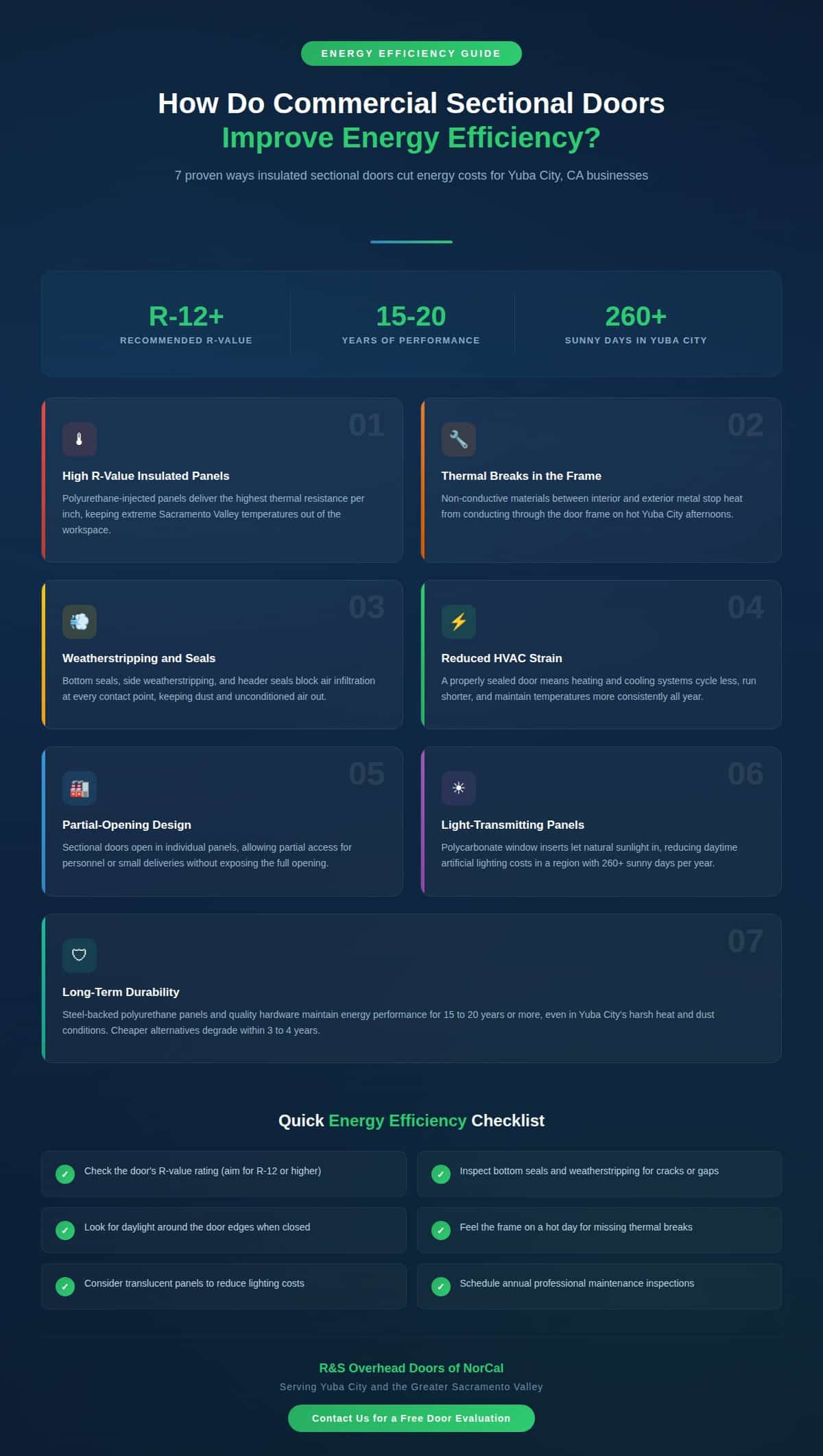
High R-Value Insulated Panels Keep Extreme Temperatures Out
The insulation inside a commercial sectional door panel is measured by its R-value, which is simply a rating of how well the material resists heat transfer. The higher the R-value, the better the door keeps outside temperatures from affecting the inside of the building.
Commercial sectional doors generally come in three insulation configurations. Single-layer steel doors offer very little thermal resistance and are best suited for buildings where temperature control is not a concern. Polystyrene-filled panels offer a moderate level of insulation and are a step up in performance. Polyurethane-injected panels provide the highest R-value per inch of thickness and are the go-to choice for businesses that need serious climate control.
In Yuba City, where summer afternoons regularly exceed 105 degrees and winter nights hover near freezing, an uninsulated or poorly insulated commercial door turns the entire building into a liability. HVAC systems are forced to run continuously just to maintain a comfortable working temperature, driving energy costs up month after month.
From an industry standpoint, most commercial properties in the greater Yuba City and Marysville area that upgrade from non-insulated to polyurethane-core panels notice a significant improvement in indoor comfort almost immediately. The difference is especially obvious in metal buildings and older concrete block structures that offer limited wall insulation to begin with.
Tip
Before purchasing a new commercial sectional door, always check the R-value rating on the product specifications. For the climate in Yuba City and the surrounding Sacramento Valley, an R-12 rating or higher is recommended. Ask the installer specifically about polyurethane-injected panels, as they consistently outperform polystyrene in thermal testing.
For a deeper look at what separates a standard door from a truly efficient one, check out “Why High-Performance Commercial Sectional Doors Matter.”
Thermal Breaks Reduce Heat Transfer Through the Door Frame
Even when the door panels themselves are well insulated, energy can still escape through the metal frame that holds everything together. This is where thermal breaks come in. A thermal break is a strip of non-conductive material placed between the interior and exterior sections of the door frame. Its job is to interrupt the flow of heat through the metal, which would otherwise act as a direct pathway for temperature transfer.
Think of it this way. Metal conducts heat very efficiently. On a 105-degree Yuba City afternoon, a steel door frame without a thermal break absorbs that heat on the outside and transfers it directly to the interior surface. That radiant heat warms up the air inside the building and the HVAC system has to work harder to compensate.
Many older commercial doors installed in the Yuba City area were put in without thermal breaks because energy efficiency was not a priority at the time of installation. It is one of the first things worth evaluating when looking at ways to reduce energy loss in an existing building.
What to Check
On a hot afternoon, place a hand on the inside surface of the door frame. If the metal feels warm or hot to the touch, there is likely no thermal break present and heat is conducting freely into the workspace. A qualified commercial door technician can confirm whether a thermal break exists and recommend options for upgrading.
Beyond energy performance, the right door also plays a critical role in protecting a business, which is covered in detail in “What Makes Commercial Sectional Doors Safe and Secure.”
Weatherstripping and Bottom Seals Block Costly Air Infiltration
Air infiltration is one of the most overlooked causes of energy waste in commercial buildings. It refers to outside air leaking in through gaps around the perimeter of a closed door. Even small gaps can allow a surprising volume of unconditioned air to enter the building, forcing the HVAC system to constantly adjust.
Commercial sectional doors address this problem through a system of seals at every contact point. Bottom rubber seals press firmly against the floor when the door is closed. Side weatherstripping compresses against the door tracks to close off the edges. Header seals along the top of the opening prevent warm or cold air from entering above the door panels.
One of the reasons sectional doors outperform other commercial door types in this area is their design. Because they close in multiple horizontal sections that compress together, there are more natural sealing points than with a single-piece tilt door or a roll-up sheet door.
In Yuba City and the surrounding agricultural areas, air infiltration brings more than just temperature problems. Dust, allergens and particulates from nearby farming operations also enter through gaps in door seals. This forces HVAC filtration systems to work harder and shortens filter life, adding to operational costs.
Worn-out weatherstripping is one of the most common issues found on commercial doors that are more than five years old. Fortunately, it is also one of the most affordable fixes available.
Tip
Inspect all door seals at least twice a year, once before summer and once before winter. Look for cracking, hardening, or visible gaps. A simple test is to close the door during daylight hours and check for any light visible around the edges. If light is getting through, air is getting through. Replacement weatherstripping typically depends on the door size and seal type, making it one of the most cost-effective energy upgrades available.
Staying on top of these small maintenance tasks also extends the overall lifespan of the door, a topic explored further in “How Long Do Commercial Sectional Doors Actually Last.”
Reduced HVAC Strain Means Lower Monthly Energy Bills
Everything discussed so far, insulation, thermal breaks and weatherstripping, connects directly to one outcome that every business owner cares about: the monthly energy bill.
When a commercial sectional door is properly insulated and sealed, the heating and cooling system inside the building does not have to fight against constant temperature leakage through the door opening. The HVAC system cycles less frequently, runs for shorter periods and maintains set temperatures more consistently. Over the course of a year, that reduced workload adds up to meaningful savings.
Industry data consistently shows that commercial buildings can lose a significant percentage of their conditioned air through poorly insulated or unsealed door openings. In a climate like Yuba City’s, where there are months of extreme heat and periods of genuine cold, those losses compound quickly.
For the types of businesses common in the Yuba City area, including warehouses along the Highway 99 corridor, auto repair shops, agricultural storage facilities and light manufacturing operations, HVAC costs are frequently among the top three monthly operating expenses. A well-insulated commercial sectional door directly reduces that line item.
Many business owners report that they did not fully realize how much energy their old door was costing them until they compared utility bills before and after an upgrade. The difference is often more substantial than expected.
Tip
If energy bills spike noticeably during summer or winter months, the commercial door should be one of the first things evaluated before assuming the HVAC system itself needs repair or replacement. A door audit is faster, cheaper and often reveals the real source of the problem.
Sectional Design Minimizes Open-Door Heat Gain and Loss
Beyond materials and insulation, the physical design of a commercial sectional door contributes to energy efficiency in a way that many people overlook.
Sectional doors open vertically in individual panels that stack along the ceiling track. This means the door can be partially opened to allow a person or a small delivery through without exposing the full width and height of the opening to outside air. Compare that to a one-piece tilt door or a full roll-up door, which is essentially all or nothing. Every time one of those doors opens fully, the entire conditioned air envelope of the building is exposed.
For Yuba City businesses that operate loading docks, service bays, or any facility where the door opens and closes multiple times throughout the day, this design feature makes a real difference. Each partial opening means less hot summer air or cold winter air entering the building and less conditioned air escaping.
Tip
Train employees to open the door only as high as needed for the specific task. A door opened halfway loses significantly less conditioned air than one opened fully. For high-traffic openings, consider adding interior strip curtains as an additional barrier. They allow people and equipment to pass through while blocking a large percentage of air exchange.
Light-Transmitting Panels Cut Down on Daytime Lighting Costs
Energy efficiency is not limited to heating and cooling. Lighting accounts for a meaningful portion of electricity costs in commercial buildings and commercial sectional doors offer a solution for that as well.
Many modern commercial sectional doors are available with translucent polycarbonate window inserts or full light-transmitting panel sections. These allow natural daylight to flood into the workspace without compromising the door’s insulation properties.
Yuba City and the greater Sacramento Valley enjoy well over 260 sunny days per year. That is an enormous amount of free natural light that can reduce dependence on artificial overhead lighting during daytime work hours. For a warehouse or shop that operates primarily during the day, the electricity savings from reduced lighting usage add up over time.
Tip
When selecting a commercial sectional door with window sections, choose insulated polycarbonate panels rather than single-pane glass. Polycarbonate is lighter, more impact-resistant and still provides solid thermal performance. Single-pane glass, while it lets light in, creates a weak point in the door’s insulation and is more prone to breakage in a commercial environment.
Built to Last: Sustained Energy Efficiency Over the Long Haul
A door’s energy efficiency is only as good as its ability to maintain that performance over time. This is one of the areas where commercial sectional doors truly stand apart from other options.
Quality commercial sectional doors are engineered for heavy-duty, high-cycle use. The insulated panels, weather seals and hardware are designed to withstand thousands of open-and-close cycles without significant degradation. Pairing the door with a reliable commercial door operator also plays a key role, as a properly matched operator ensures smooth, consistent cycling that reduces unnecessary stress on panels and seals. That means the thermal performance stays consistent year after year, rather than declining after just a few seasons.
In Yuba City’s environment, where intense summer heat, agricultural dust and occasional valley fog all take a toll on building components, durability matters. Cheaper door options tend to show wear within three to four years. Seals crack. Panels warp. Insulation compresses and loses its effectiveness. A well-built commercial sectional door with steel-backed polyurethane panels and quality hardware can maintain its energy performance for 15 to 20 years or more with proper care.
Tip
Schedule a professional maintenance inspection at least once per year. A qualified technician can identify seal degradation, panel damage, spring wear and hardware issues early, well before they begin impacting energy efficiency or become expensive repairs. Preventive maintenance is one of the smartest investments a business owner can make in the long-term performance of a commercial door.
Energy Efficiency Checklist for Yuba City Business Owners
Here is a quick reference checklist to help evaluate the energy performance of any commercial sectional door. Keep in mind that these checks also apply when comparing sectional doors to alternatives like a standard sheet metal door, which typically lacks the insulation and sealing features needed for true energy efficiency:
- Check the door’s R-value rating. For Yuba City’s climate, R-12 or higher is the recommended minimum.
- Inspect the bottom seal and side weatherstripping for cracks, hardening, or visible gaps.
- Close the door during daylight and look for any light around the perimeter edges. Light means air is getting through.
- Feel the inside of the door frame on a hot day. If it is warm, a thermal break may be missing.
- Evaluate whether translucent polycarbonate panel inserts could reduce daytime lighting costs.
- Confirm that employees are trained to open the door only as far as needed for each task.
- Schedule annual professional maintenance to catch issues before they become costly.
Why the Right Commercial Sectional Door Is a Smart Investment for Yuba City Businesses
Commercial sectional doors are more than just an entry point for a building. When properly selected, installed and maintained, they serve as one of the most effective tools for managing energy costs in a commercial facility. Unlike options such as grill roller doors, which offer minimal insulation due to their open design, sectional doors provide a fully sealed and insulated barrier. For businesses in Yuba City, CA, where the climate pushes both heating and cooling systems to their limits throughout the year, the right door can make a measurable impact on monthly utility bills and overall operational comfort.
From high R-value polyurethane insulation to thermal breaks, advanced weatherstripping and smart operational design, every element of a quality commercial sectional door works together to reduce energy waste. The key is choosing a door rated for the demands of the local climate and keeping it properly maintained.
For any business owner in the Yuba City or greater Sacramento Valley area looking to reduce energy expenses, a professional evaluation of the current commercial door setup is a practical and worthwhile first step. A knowledgeable local door specialist can assess the building, recommend the right product and ensure the installation delivers the full energy-saving potential that a commercial sectional door is designed to provide.
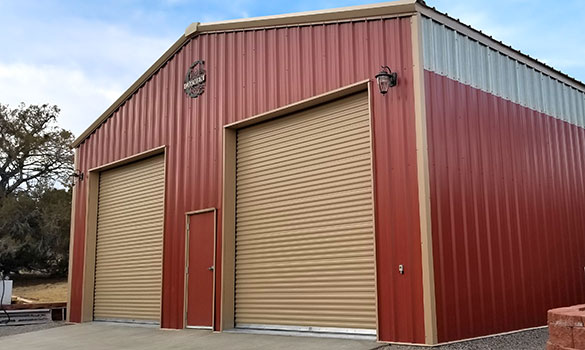
Work With a Local Commercial Door Expert in Yuba City
R&S Overhead Doors of NorCal is a trusted name in commercial and residential door services throughout Yuba City and the greater Sacramento Valley. With hands-on experience working with local businesses across a wide range of industries, our team understands the unique demands that this climate puts on commercial doors and knows exactly what it takes to maximize energy efficiency, durability and performance. Whether the need is a new installation, an upgrade to an insulated sectional door, or routine maintenance to keep an existing door performing at its best, we are ready to help. Contact us today or give us a call to schedule a free commercial door evaluation and start saving on energy costs.