
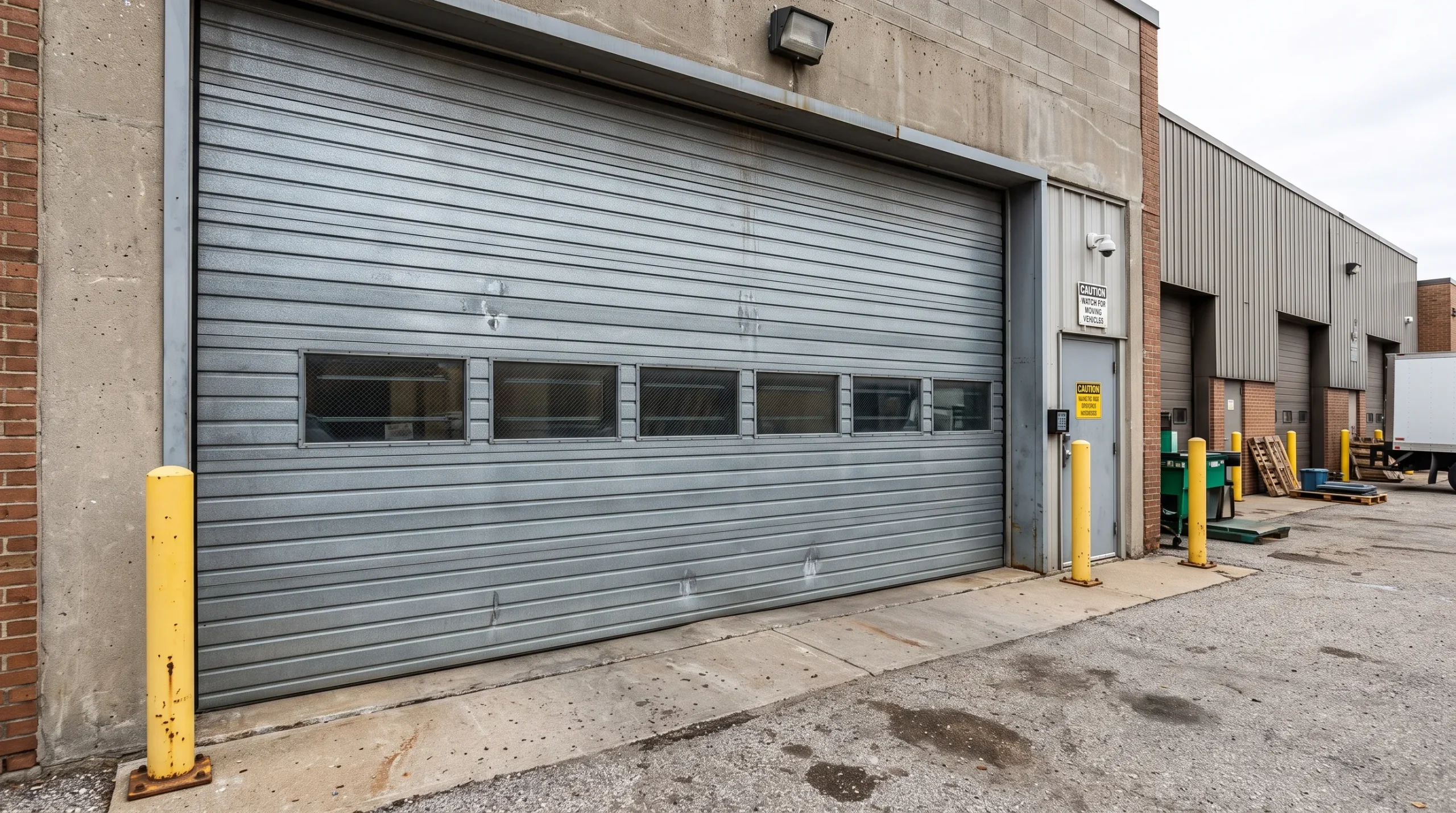
Match the cycle rating to how often the door actually runs, not to the size of the building. Commercial doors commonly ship with springs rated around 10,000 cycles, which works out to roughly three to five years at 10 openings a day and under two years at 25. Count your real daily openings, multiply by 365, then multiply by the years you want before the next spring replacement. That figure gives you a useful starting point for the conversation about rating. The six usage levels below are general planning guidance rather than universal requirements, because the right specification depends on the particular door, the manufacturer’s published ratings, the application, and how the opening is actually used. Confirm the final spec against the manufacturer’s documentation for your door.
Key takeaways
- One cycle is one full open plus one full close. Half cycles do not exist for spec purposes, and a door that opens and closes four times an hour is running roughly 32 cycles in an 8 hour shift.
- Cycle rating is a spring specification first. Springs are the consumable, and they are what the rating number describes.
- Under-specifying tends to be a costly mistake on commercial doors, because a spring failure takes the opening out of service during business hours.
- High-cycle springs generally cost more up front and less per year. On doors running roughly 20 or more daily cycles the math often favors the upgrade, though it depends on the door and the application.
- The opener has a separate duty cycle rating. A high-cycle spring behind an undersized operator just moves the failure to the motor.
- Cycle count is one of the most important factors in when a door needs service, though not the only one. Age, condition, operating environment, past damage, and maintenance history all feed into it, and two identical doors installed the same week can be far apart in wear.
What counts as one cycle, and why the number decides the spec
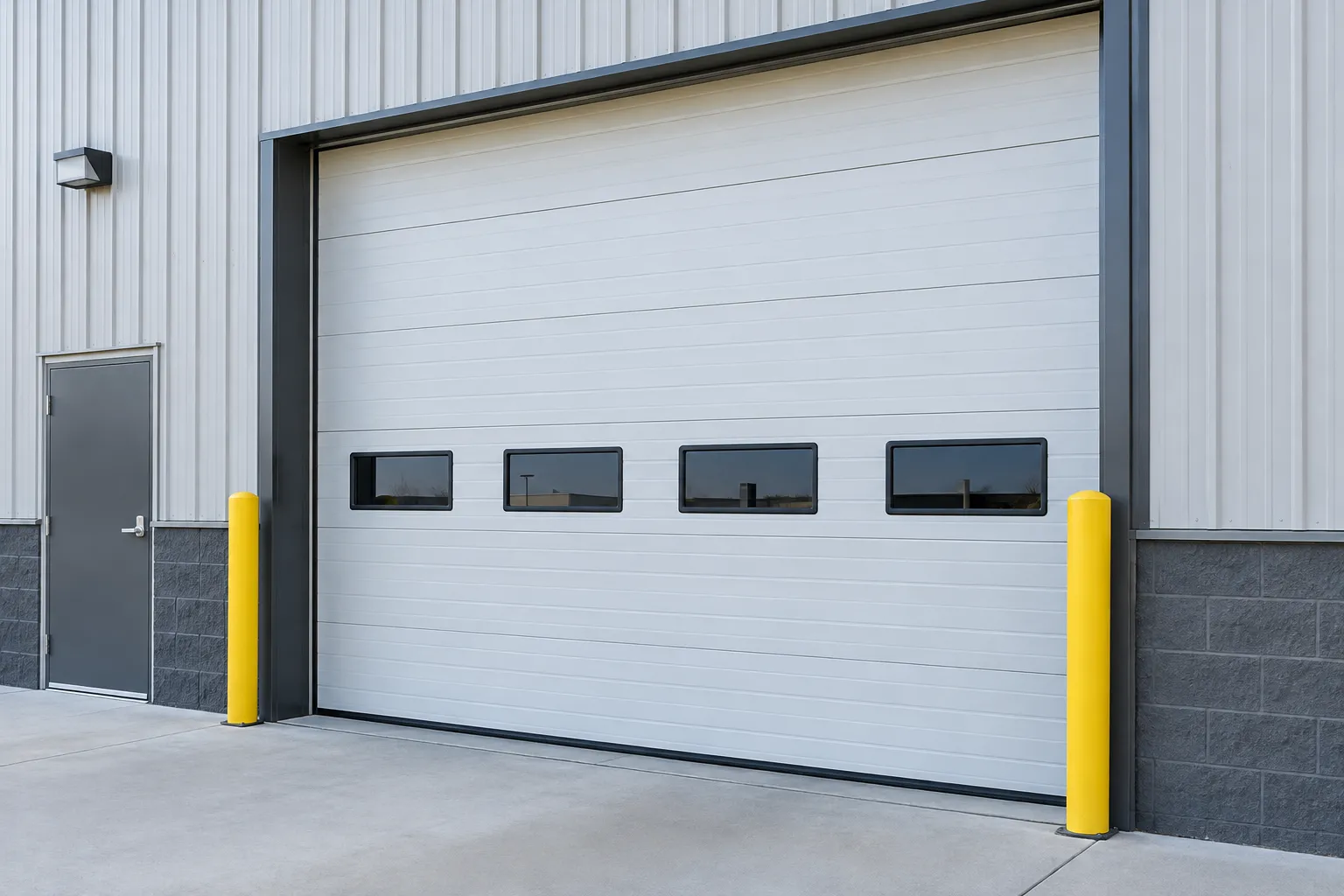
One cycle equals one complete open and one complete close. That is the unit every spring manufacturer rates against, so it is the unit you need before you can specify anything. A 10,000 cycle spring is not a promise of ten thousand days. It is ten thousand up-and-down trips, and how fast you burn through them depends entirely on your operation.
The arithmetic is simple and worth doing before you buy. Daily cycles multiplied by 365 gives annual cycles. Annual cycles multiplied by your target service interval gives the rating you need. A shop running 20 cycles a day burns 7,300 cycles a year, which means a 10,000 cycle spring is finished in under 18 months.
Cycle rating is one of several specifications that decide which door belongs on an opening, alongside door type, material, insulation, and clearances. For the full selection framework, start with our master guide, When Should You Call a Professional for a Garage Door Off Track? 10 Signs You Should Stop and Step Away.
Why commercial garage door cycle ratings are measured in cycles instead of years
Manufacturers rate in cycles because a spring fails from metal fatigue, not from the calendar. Every cycle winds and unwinds the steel, and each pass costs a small amount of the spring’s remaining life. Rating in years would require the manufacturer to guess your traffic, and the guess would be wrong in both directions. This is also why warranty language on commercial doors is usually written in cycles.
The 6 usage levels
The levels below run from lightest to heaviest so you can find your building on the ladder. Treat the cycle figures throughout as general planning ranges rather than fixed requirements, since actual needs vary by door, manufacturer, usage pattern, and application. In our experience, levels 2 and 3 describe a large share of the commercial openings we maintain locally, and level 1 doors are among the ones we most often find under-specified for what the tenant actually does with them.
1. Light use: storage, seasonal access, and single-tenant back bays
Under 5 cycles a day, roughly 1,800 cycles a year, and a standard 10,000 cycle spring is often adequate at this level. Five to seven years before spring replacement is a reasonable planning assumption, and sometimes longer.
This is the profile for a self-storage unit, a seasonal equipment bay, an agricultural outbuilding, or a back door that gets opened for deliveries and little else. Doors at this level are frequently basic non-insulated designs, and a sheet metal door is a common and sensible choice for the duty.
The trap at this level is a tenant change. A storage bay that becomes a workshop can jump from 3 cycles a day to 25 without anyone re-specifying the door, and the springs then fail in a year and a half instead of six years.
Call a pro if the door’s usage pattern has changed since it was installed, even if nothing is wrong yet. A spring upgrade during a scheduled visit costs far less than a broken spring during a work day.
Why a light use commercial door still needs its cycle count checked
The rating is only correct for the traffic it was chosen for. Because nothing about the door’s appearance changes when usage triples, under-specification at this level is invisible until the failure. A two minute conversation about daily openings during annual maintenance catches it.
2. Standard commercial: small shops, contractor bays, and service counters
Roughly 5 to 15 cycles a day, or 1,800 to 5,500 cycles a year. A 25,000 cycle spring is a common planning target at this level. That typically works out to five to eight years at the middle of this range instead of two to three years on standard springs, depending on the door and how well it is maintained.
This is a very common commercial profile: a two-bay contractor shop, a small fabrication space, a tire shop, a fire station apparatus bay on a quiet rotation. Insulated sectional construction is typical, and the commercial sectional door is the default for good reason at this level, since it seals well and handles moderate traffic without special hardware.
The cost difference between 10,000 and 25,000 cycle springs at this level is usually small relative to one emergency service call, which is the argument we tend to make on quotes in this band.
Call a pro if you are at the top of this range (12 to 15 cycles daily) on factory springs. At that volume you may well be on a roughly two-year replacement clock whether or not anyone has told you.
How many cycles a standard commercial garage door needs per year
Take your busiest normal week rather than your average week, because springs fail on peak load. If you hit 15 cycles on Mondays and 8 the rest of the week, spec against something closer to the Monday number. Averaging down is how doors end up under-specified.
3. Moderate to heavy: retail storefronts, parking structures, and active service shops
Roughly 15 to 30 cycles a day, or 5,500 to 11,000 cycles a year. A 50,000 cycle rating is a common planning target here. At the top of this band, a standard spring set can be finished inside 12 months.
Retail security closures and parking garage entries live here, and they are often rolling assemblies rather than sectional. A grill roller door suits these openings because it takes daily open-and-close duty in a compact coil and provides visibility and airflow when closed. Rolling steel is likewise built for repetitive duty, which our post on rolling steel doors built for heavy daily use covers in more detail.
At this level, cycle rating stops being the only variable. Roller quality, hinge grade, and bearing type all start to matter, because they are now seeing five figures of annual movement.
Call a pro if the door is opening and closing more than 20 times a day on hardware that was specified as standard duty. That is a rebuild conversation, not a spring conversation.
Why higher cycle ratings usually make sense on a moderate use commercial door
Much below that at this traffic level, you can end up replacing springs more often than you inspect the rest of the door, which inverts the maintenance schedule. Getting to a multi-year spring interval lets annual maintenance actually catch the slower-developing problems in tracks, cables, and bearings.
4. High volume: distribution, multi-shift warehouses, and fire-rated separations
Roughly 30 to 60 cycles a day, or 11,000 to 22,000 cycles a year. A 75,000 to 100,000 cycle range is the usual planning territory. Ratings much below that often mean a replacement interval inside 12 months.
This is warehouse and distribution territory, often with several openings running simultaneously and a door that is part of the building’s throughput rather than just its envelope. Buildings at this level frequently also have fire-rated door assemblies separating occupancies, and those carry obligations that have nothing to do with traffic volume. Where NFPA 80, the Standard for Fire Doors and Other Opening Protectives, has been adopted and is enforced, fire door assemblies are generally required to be inspected and tested at least annually, and rolling steel fire doors are drop tested as part of that inspection. Those provisions sit in NFPA 80 Section 5.2, which also calls for a written record to be kept for review by the authority having jurisdiction. Adoption and enforcement vary by jurisdiction, so confirm what applies to your building with your local AHJ. The standard is published by the NFPA. Separately, a fire-rated rolling door that has been cycled to the point of binding may not close as designed when it matters.
Call a pro on a scheduled interval rather than on failure. At this volume, planned spring replacement during off hours is dramatically cheaper than an unplanned one at 10am.
What cycle rating a high volume commercial garage door needs for continuous shift work
Count cycles per shift and multiply by shifts, not by hours of operation. A building that runs two shifts at 25 cycles each is a 50 cycle per day door even though no single shift feels heavy. This is one of the more common counting errors we see on distribution sites.
5. Very high volume: loading docks, transfer stations, and near-continuous operation
Roughly 60 to 150 cycles a day, or 22,000 to 55,000 cycles a year. Planning at this level generally starts around 100,000 cycles, with heavy-duty operators and upgraded hardware throughout. Standard components rarely last long here.
At this level the door is production equipment. The operator becomes as critical as the springs, because a motor rated for intermittent duty will fail long before high-cycle springs do. Signs that commercial operators are reaching end of life are worth knowing, and our post on 5 signs it is time to replace your warehouse gate operators applies to door operators as well.
Doors in this band also justify preventive component replacement, meaning rollers, hinges, and bearings get changed on a schedule based on cycle count rather than waiting for symptoms.
Call a pro to set up a cycle-count based maintenance program. Reactive maintenance at 100 cycles a day is not a strategy, it is a queue of outages.
Why very high cycle commercial doors need the operator specified alongside the springs
Springs and operators have independent ratings, and the assembly lives at the weaker of the two. Pairing 100,000 cycle springs with a light commercial operator produces a door that stops working on schedule anyway, just from a different component. When we quote at this level we spec both together, which is also why the numbers look different from a residential-style quote.
6. Continuous and specialty: cold storage, car washes, food processing, and transit
Above 150 cycles a day, into the hundreds. Planning at this level often starts around 200,000 cycles or more, and the answer frequently involves a different door type rather than just stronger springs. At this frequency, high-speed doors or air-curtain-assisted openings often replace conventional sectional assemblies entirely.
Cycle count is not the only pressure at this level. A cold storage opening that cycles 200 times a day is also bleeding conditioned air on every cycle, and the energy cost of that air loss can rival the maintenance cost of the door. The U.S. Department of Energy publishes the building envelope and insulation fundamentals behind that tradeoff, and they are worth understanding before choosing between a faster door and a better-sealed one. Wash-down environments add corrosion to the equation, which changes material selection as much as cycle rating does.
Call a pro before you buy at this level, not after. Specifying a continuous-duty opening is a design conversation, and the wrong door type cannot be fixed with better springs.
What cycle rating a continuous duty commercial door requires in cold storage and wash-down environments
Rate for the count, then select for the environment. Cold storage adds condensation and thermal cycling, wash-down adds moisture and chemicals, and food processing adds cleanability requirements. Each of those can shorten the real-world life of a technically correct 200,000 cycle spring, so the rating is a floor rather than a finish line.
Cycle rating by usage level: the quick reference
Usage level | Cycles per day | Cycles per year | Common planning range | Typical spring life at that spec |
1. Light use | Under 5 | Under 1,800 | 10,000 cycles | 5 to 7 years |
2. Standard commercial | 5 to 15 | 1,800 to 5,500 | 25,000 cycles | 5 to 8 years |
3. Moderate to heavy | 15 to 30 | 5,500 to 11,000 | 50,000 cycles | 4 to 7 years |
4. High volume | 30 to 60 | 11,000 to 22,000 | 75,000 to 100,000 cycles | 4 to 6 years |
5. Very high volume | 60 to 150 | 22,000 to 55,000 | 100,000 cycles plus heavy-duty operator | 2 to 4 years |
6. Continuous and specialty | 150 plus | 55,000 plus | 200,000 cycles or a different door type | Varies, plan on programmed replacement |
Read every column in this table as general planning guidance rather than a specification. Actual requirements vary by door, manufacturer, usage, and application, and maintenance quality, balance, and operating environment all move the service-life figures. Confirm the final rating against the door manufacturer’s documentation.
What else wears out on a high-cycle door besides the springs
Springs get the rating, but cables, rollers, hinges, bearings, and the operator all wear on the same cycle count. A door specified with high-cycle springs and standard everything else fails on schedule anyway, just somewhere less obvious.
Cables stretch and fray from repeated winding. Rollers develop play in the stem and flat spots on the wheel. End bearings dry out. Hinges elongate at their pin holes, which lets sections shift relative to each other and pushes rollers toward the edge of the track. The underlying spring math is the same on residential doors, which our post on how long garage door springs last walks through, and the pattern of total-assembly wear is covered in how long commercial sectional doors actually last.
If cumulative wear has reached the point where full door replacement makes more sense than component work, the next step is getting the opening dimensions documented correctly, which is covered in How Do You Measure for a New Commercial Garage Door? 8 Dimensions to Get Right Before You Order.
How to tell if a commercial garage door is wearing out from cycle count
Watch for the door getting louder over months, for uneven travel, for the opener working harder than it used to, and for visible gaps between the door and the track. Cycle wear announces itself gradually, unlike a spring break, which is why doors on heavy duty need scheduled inspection instead of complaint-driven service.
How to count your building’s actual daily cycles
Count for one representative week, not one day, and use the busiest normal week rather than the average. Three practical methods, in order of accuracy:
- Read the opener’s cycle counter. Many commercial operators track cycles. If yours does, this is the real number and nothing else is needed.
- Log manually for a week. A clipboard at the door and a tally mark per opening. Crude, accurate, and takes nobody’s time.
- Estimate from operations. Deliveries per day plus vehicle movements plus scheduled openings, then add a margin, because self-estimates tend to run low. In our experience, owner estimates are often meaningfully short of what a counter later shows, which is the reason the margin matters.
Whichever method you use, write the number down and keep it with the door’s service records. Cycle count is the single most useful piece of data for planning commercial door maintenance, and almost nobody has it.
Why counting commercial garage door cycles beats guessing at the spec
Guessing produces two failure modes, and both cost money. Under-specify and you buy emergency service calls. Over-specify and you pay for capacity you never use. A week with a clipboard removes both.
Get the spec right the first time
Cycle rating is the difference between a door that gets serviced on your schedule and one that fails on its own. Count the cycles, spec the springs to the count, match the operator to the springs, and put the number in your maintenance file. That sequence costs nothing and prevents most of the emergency commercial door calls we take.
There is one more layer worth checking before you order, particularly on fire-rated assemblies and openings in exit paths, and that is what the building code requires of the assembly regardless of how you spec the hardware. See Does Your Commercial Garage Door Need to Meet Code in California? 7 Requirements to Check for that side of it. If you would rather have someone count, spec, and quote it for you, that is what our commercial garage door service does, alongside commercial overhead door repair when a door is already down.
R&S Overhead Doors of NorCal specs and services commercial doors across Yuba City and the surrounding Sacramento Valley, and we will tell you honestly when a cheaper spring is the right answer. Request a free commercial door quote or book a cycle-count assessment.